Comprehensive Engineering Guide: GW256 Thermal Imaging Simulator and Civil Structure Diagnostics
Welcome to our expert technical review exploring advanced thermal imaging and non-destructive testing diagnostics. To explore the interactive engineering simulator, live thermographic color palettes, and full thermodynamic calculations firsthand, check out the original article on STEM Simulator GW256 Thermal Camera Analysis. Modern infrared thermography has transformed how structural engineers inspect civil infrastructure, locate electrical faults, and detect hidden water leaks without invasive physical damage.
The Physics of Infrared Radiation and the Stefan-Boltzmann Law
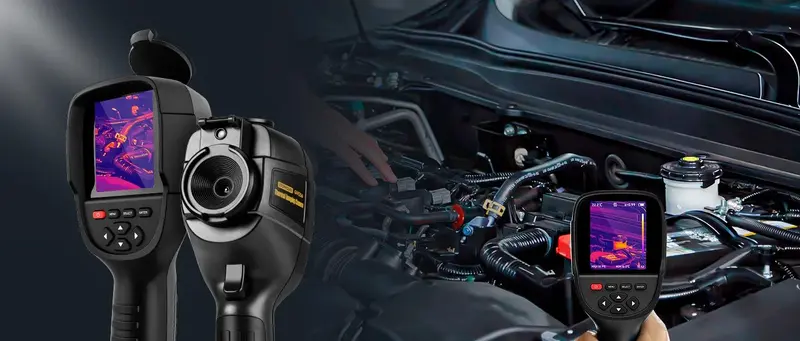
The GW256 dual-spectrum thermal imaging camera operates by detecting electromagnetic infrared waves emitted by objects possessing temperatures above absolute zero. The total radiant thermal power flux emitted per unit surface area of a blackbody is mathematically defined by the Stefan-Boltzmann law:
E = e × sigma × T4
In this equation, E represents the thermal radiant flux, e denotes the surface emissivity ratio, sigma is the Stefan-Boltzmann constant (approximately 5.67 × 10⁻⁸ watts per square meter Kelvin to the power of four), and T represents the absolute surface temperature in Kelvin. Calibrating the thermographic camera correctly using precise emissivity values is essential for accurate radiometric temperature readings.
The Critical Importance of Emissivity Calibration in Civil Engineering
In building physics and structural health monitoring, surface emissivity management is paramount. Inorganic construction materials such as reinforced concrete exhibit high emissivity values ranging from 0.91 to 0.94, allowing infrared sensors to capture radiated heat efficiently. In contrast, polished structural steel or reflective metal components possess very low emissivity values (often between 0.15 and 0.30), which can create false thermal reflections if uncorrected.
Failure to adjust the emissivity setting on instruments like the GW256 leads to significant temperature measurement errors during non-destructive testing (NDT), potentially masking critical structural flaws or moisture accumulation inside building facades.
Thermal Bridging and Fourier Law of Heat Conduction
Evaluating thermal insulation performance requires an understanding of conductive heat transfer governed by Fourier law:
q = -k × (dT / dx)
Here, q is the heat flux rate, k represents the thermal conductivity coefficient of the material, and dT over dx describes the temperature gradient across the component thickness. Utilizing the 256 by 192 infrared sensor resolution of the GW256, civil engineers can pinpoint thermal bridging zones where fiberglass insulation has degraded or concrete joints suffer from structural thermal leakage.
Detecting Hidden Moisture Leaks via Evaporative Cooling
Water infiltration and hidden pipeline leaks within concrete walls or PVC drainage networks alter local temperature profiles due to evaporative cooling and the exceptionally high specific heat capacity of water. The GW256 thermal camera visualizes these localized cool anomalies using diagnostic color palettes such as Ironbow and Spectra, enabling maintenance teams to intervene before rebar corrosion or sulfate attack compromises building integrity.
To test the interactive thermal camera simulator, examine peer-reviewed reference standards, and review complete thermodynamic datasets, visit the source article directly at STEM Simulator GW256 Thermal Camera Analysis.
Written exclusively by Ir. MD Nursyazwi at STEM Simulator. Follow on Facebook, X (formerly Twitter), Reddit, and Academia.edu.
