Tuesday, November 10, 2026

DURIOLOOP ENGINE GENERATION 1 : TURNING DURIAN WASTE INTO BIOGAS, BIOCHAR and ORGANIC FERTILIZER

DURIOLOOP ENGINE GENERATION 1 BY FABRIKATUR: TURNING DURIAN WASTE INTO BIOGAS, BIOCHAR & ORGANIC FERTILIZER!

Don't throw away your food waste and durian husks! Instead of letting organic waste rot into foul-smelling garbage that pollutes the environment, this material can actually be transformed into high-performance biogas energy, biochar, and liquid organic fertilizer using the closed-loop system of the DurioLoop Engine Generation 1. To watch the original video demonstration and follow the latest updates from the creator, check out the source video on TikTok: DurioLoop Engine Generation 1 by Fabrikatur. Here is the full breakdown of the process flow, technical specifications, and ecosystem benefits of this innovative system designed by Fabrikatur.


PROCESS FLOW & TECHNICAL SPECIFICATIONS

1. Anaerobic Digestion (First Stage)

  • Organic Waste Input: Food waste and wet durian husks are loaded into the Anaerobic Digester tank.
  • Closed Fermentation: The breakdown process occurs in an oxygen-free, closed environment to digest organic matter and produce methane gas alongside liquid digestate.

2. Gas Filtration & Safety System

  • Dual-Stage Filtration: Generated methane gas is purified through 3 specialized filter units to remove H2S (hydrogen sulfide) gas and water moisture.
  • Safety Valve: Equipped with a non-return (one-way) safety valve to maintain safe operations and ensure smooth methane gas flow directly to the reactor.

3. Pyrolysis Reactor & Biochar Production

  • Pyrolitic Combustion: The filtered biogas stream delivers direct heat to the Pyrolysis Reactor, processing dry durian husks via oxygen-free high-heat thermal conversion.
  • High-Quality Biochar Output: Converts tough, dense durian husks into premium carbon-rich biomass biochar.

HIGH YIELD & BENEFITS FOR FARMERS

1. Digestate Production (Liquid Organic Fertilizer)

  • Nutrient-Rich Liquid: Digestate is a nutrient-dense liquid and bio-slurry generated from anaerobic digestion, ready for immediate use as an organic bio-fertilizer.
  • Crop Enhancement: Nourishes a wide range of crops, including leafy vegetables and fruit trees.

2. Soil pH Neutralizer & Conditioning

  • Neutralizing Soil Acidity: The produced biochar acts as a natural soil conditioner, restoring acidic soils to optimal pH balance, making it ideal for durian orchards and general agriculture.
  • Enhanced Nutrient Retention: Increases long-term water retention and nutrient holding capacity within the soil matrix.

3. Zero Waste & Community Economy

  • Waste-to-Energy Innovation: Creates a sustainable zero-waste circular loop, keeping the environment clean while boosting the local economic livelihood of farmers.

This local green technology innovation drives sustainable agriculture and environmental preservation in Sabah! For more details and to view the official project demonstration, visit the original post on TikTok: DurioLoop Engine Generation 1 by Fabrikatur.

Monday, November 9, 2026

Comprehensive Engineering and Hydraulic Analysis of the HydroPure Pro Portable Ultrafiltration System

Comprehensive Engineering and Hydraulic Analysis of the HydroPure Pro Portable Ultrafiltration System

Access to safe, potable drinking water during remote wilderness expeditions, emergency disaster relief, and off-grid camping is a critical survival priority. To explore the full technical specifications, interactive hydraulic simulation tools, and complete microbiological research data, check out the original post on Fabrikatur HydroPure Pro Portable Ultrafiltration Analysis. Modern portable water purification has advanced significantly beyond simple charcoal drips, integrating high-volume manual piston pumps and multi-stage hollow fiber membrane technologies that eliminate harmful pathogens while maintaining high fluid delivery rates.

Hydraulic Performance and Fluid Mechanics in Portable Pumps

The core mechanical advantage of advanced portable water treatment units relies on manual piston displacement driven by ergonomic leverage. As operators cycle the pump handle, positive hydrostatic differential pressure forces raw surface water through micro-porous filtration barriers. Fluid transport through these narrow capillary channels strictly adheres to fundamental laminar flow principles.

Under normal operating cadences of thirty to forty-five strokes per minute, the system generates stable gauge pressure, delivering up to one and a half liters of purified water every minute. This optimal balance ensures high volumetric output while minimizing operator physical fatigue during extended field deployments.

Tri-Stage Multi-Barrier Filtration Architecture

To prevent premature membrane fouling and surface cake layer accumulation, high-end portable purifiers deploy a sequential multi-barrier approach:

  • Stage 1: Stainless Steel Intake Mesh and Pre-Filter: Suspended directly in source water, this primary screen captures large macro-particles, sand, silt, and vegetative debris down to one hundred micrometers, protecting delicate inner membranes from physical abrasion.
  • Stage 2: Hollow Fiber Ultrafiltration Module: Comprising high-density polyethersulfone capillary fibers with a nominal pore size of zero point zero one micrometers, this barrier physically blocks suspended solids, microplastics, bacteria, and protozoan cysts.
  • Stage 3: Granular Activated Carbon Bed: Utilizes high-surface-area porous carbon to adsorb dissolved organic compounds, volatile chemicals, residual pesticides, and offensive taste or odor molecules, ensuring crisp and clean drinking water.

Microbiological Log Reduction and Regulatory Safety Standards

Meeting stringent public health benchmarks such as the National Standard for Drinking Water Quality by the Ministry of Health Malaysia and World Health Organization guidelines requires rigorous biological validation. The zero-tolerance requirement for pathogens like Escherichia coli is satisfied through precise membrane sizing.

Because the ultrafiltration pore rating of zero point zero one micrometers is far smaller than typical waterborne contaminants, the system achieves exceptional performance:

  • Bacterial Retention: Completely blocks pathogenic bacteria such as Vibrio cholerae and Salmonella, providing a validated log reduction value exceeding six point zero, representing ninety-nine point nine nine nine nine percent removal efficiency.
  • Protozoan Parasite Exclusion: Effectively screens out chlorine-resistant cysts like Giardia lamblia and Cryptosporidium parvum through physical size exclusion.
  • Turbidity Reduction: Suppresses murky source water turbidity well below the strict one point zero Nephelometric Turbidity Unit safety threshold.

Membrane Regeneration and Field Durability

Extended use in highly turbid waters naturally leads to suspended sediment accumulation on the outer surface of hollow fiber membranes. To maintain long operational lifespans up to three thousand liters, the system incorporates a reversible backwash mechanism. By reversing hydraulic flow through the membrane matrix, operators can flush away trapped cake layers, restoring over eighty-five percent of initial clean water hydraulic flux in the field.

To review the interactive fluid dynamics simulators, detailed compliance reports, and full engineering literature, visit the original article directly at Fabrikatur HydroPure Pro Portable Ultrafiltration Analysis.


Written exclusively by Ir. MD Nursyazwi at Fabrikatur. Follow on Facebook, X (formerly Twitter), Reddit, and Academia.edu.

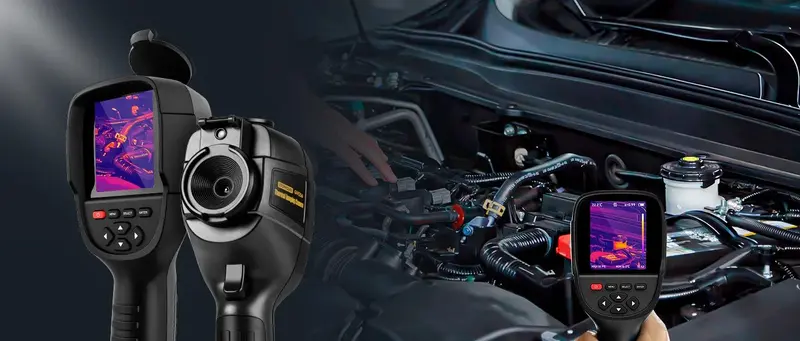
Simulator Kamera Termografi GW256: Analisis Termodinamik, Emisiviti dan Diagnostik Struktur Kejuruteraan Awam

Comprehensive Engineering Guide: GW256 Thermal Imaging Simulator and Civil Structure Diagnostics

Welcome to our expert technical review exploring advanced thermal imaging and non-destructive testing diagnostics. To explore the interactive engineering simulator, live thermographic color palettes, and full thermodynamic calculations firsthand, check out the original article on STEM Simulator GW256 Thermal Camera Analysis. Modern infrared thermography has transformed how structural engineers inspect civil infrastructure, locate electrical faults, and detect hidden water leaks without invasive physical damage.

The Physics of Infrared Radiation and the Stefan-Boltzmann Law


The GW256 dual-spectrum thermal imaging camera operates by detecting electromagnetic infrared waves emitted by objects possessing temperatures above absolute zero. The total radiant thermal power flux emitted per unit surface area of a blackbody is mathematically defined by the Stefan-Boltzmann law:

E = e × sigma × T4

In this equation, E represents the thermal radiant flux, e denotes the surface emissivity ratio, sigma is the Stefan-Boltzmann constant (approximately 5.67 × 10⁻⁸ watts per square meter Kelvin to the power of four), and T represents the absolute surface temperature in Kelvin. Calibrating the thermographic camera correctly using precise emissivity values is essential for accurate radiometric temperature readings.

The Critical Importance of Emissivity Calibration in Civil Engineering

In building physics and structural health monitoring, surface emissivity management is paramount. Inorganic construction materials such as reinforced concrete exhibit high emissivity values ranging from 0.91 to 0.94, allowing infrared sensors to capture radiated heat efficiently. In contrast, polished structural steel or reflective metal components possess very low emissivity values (often between 0.15 and 0.30), which can create false thermal reflections if uncorrected.

Failure to adjust the emissivity setting on instruments like the GW256 leads to significant temperature measurement errors during non-destructive testing (NDT), potentially masking critical structural flaws or moisture accumulation inside building facades.

Thermal Bridging and Fourier Law of Heat Conduction

Evaluating thermal insulation performance requires an understanding of conductive heat transfer governed by Fourier law:

q = -k × (dT / dx)

Here, q is the heat flux rate, k represents the thermal conductivity coefficient of the material, and dT over dx describes the temperature gradient across the component thickness. Utilizing the 256 by 192 infrared sensor resolution of the GW256, civil engineers can pinpoint thermal bridging zones where fiberglass insulation has degraded or concrete joints suffer from structural thermal leakage.

Detecting Hidden Moisture Leaks via Evaporative Cooling

Water infiltration and hidden pipeline leaks within concrete walls or PVC drainage networks alter local temperature profiles due to evaporative cooling and the exceptionally high specific heat capacity of water. The GW256 thermal camera visualizes these localized cool anomalies using diagnostic color palettes such as Ironbow and Spectra, enabling maintenance teams to intervene before rebar corrosion or sulfate attack compromises building integrity.

To test the interactive thermal camera simulator, examine peer-reviewed reference standards, and review complete thermodynamic datasets, visit the source article directly at STEM Simulator GW256 Thermal Camera Analysis.


Written exclusively by Ir. MD Nursyazwi at STEM Simulator. Follow on Facebook, X (formerly Twitter), Reddit, and Academia.edu.

Linear Electromagnetic Generator: Kinetic Flux Induction and Energy Harvesting Analysis

Linear Electromagnetic Generator: Kinetic Flux Induction and Energy Harvesting Analysis

Welcome to our comprehensive technical review of direct reciprocating kinetic energy harvesting systems. If you want to explore the original interactive engineering simulator, live calculations, and complete technical breakdown, visit the main article on Fabrikatur Linear Electromagnetic Generator Analysis. As sustainable engineering shifts toward smart, maintenance-free micro-generation, linear electromagnetic harvesters offer an exceptional alternative to traditional rotary alternators by converting translational motion directly into clean electrical power.

Electromechanical Architecture and Spatial Alignment

From an electromechanical design standpoint, a linear electromagnetic generator consists of a stationary cylindrical coil wound with copper magnet wire surrounding a reciprocating permanent magnet core. Unlike rotating machinery that suffers from mechanical gear friction and bearing wear, linear systems use direct-drive oscillation. The motion is governed by sinusoidal displacement equations where stroke amplitude and oscillation frequency dictate the temporal flux cutting rate.

To maximize conversion efficiency, spatial alignment between the solenoid coil length and the magnet stack is critical. If the coil is significantly longer than the magnetic stroke, opposing flux vectors at the magnet edges cause destructive interference, generating internal circulating currents and reducing net electromotive force. Proper engineering matches the coil length to the magnet stack thickness plus pole displacement depth.

Physics of Faraday-Lenz Law and Back-EMF Damping

The core operating principle relies on Faraday's Law of Electromagnetic Induction. The induced electromotive force inside the solenoidal conductor depends directly on the number of turns and the rapid rate of change of magnetic flux over time. According to Lenz's Law, the induced current creates an opposing magnetic field that reacts against the physical movement of the magnet.

This reaction manifests as Lorentz electromagnetic damping resistance. As the electrical load draws more current, mechanical braking resistance increases proportionally. Therefore, input mechanical work must constantly overcome both internal friction and magnetic damping to sustain steady reciprocating oscillation.

Advanced Material Science in Energy Harvesters

Material selection defines the operational lifespan and voltage yield of linear generators:

  • Neodymium Permanent Magnets: Sintered neodymium-iron-boron magnets provide ultra-high remanence and intrinsic coercivity, delivering maximum field gradients per millimeter of displacement compared to standard ceramic or ferrite alternatives.
  • Enamelled Copper Magnet Wire: High-purity electrolytic copper insulated with polyurethane or polyester-imide dielectric layers prevents short circuits while allowing high winding density inside the housing slot.
  • Guide Tubes and Stopper Dampening: Transparent borosilicate glass or acrylic tubes provide smooth internal surfaces, while resilient elastomer end caps absorb impact kinetic energy safely.

Conclusion and Field Applications

Linear electromagnetic generators represent a breakthrough in autonomous off-grid power generation, proving invaluable in structural vibration monitoring, ocean wave energy harvesting, and emergency hand-shaken portable electronics. To dive deeper into the mathematical models, examine the live interactive simulator, and read expert engineering insights, check out the source article directly at Fabrikatur Linear Electromagnetic Generator Analysis.


Written exclusively by Ir. MD Nursyazwi at Fabrikatur. Follow on Facebook, X (formerly Twitter), Reddit, and Academia.edu.

Comprehensive Engineering Guide: Solar Grill Portable Vacuum Oven and Thermal Physics

Comprehensive Engineering Guide: Solar Grill Portable Vacuum Oven and Thermal Physics

Welcome to our in-depth technical breakdown exploring sustainable cooking innovations. If you want to dive deeper into the original research, interactive simulators, and complete thermodynamic breakdown, check out the original article on Fabrikatur Solar Grill Portable Vacuum Oven Analysis. As renewable energy technology advances, portable off-grid cooking devices have evolved from primitive solar box cookers into high-efficiency engineering marvels. By combining non-imaging optical concentration with advanced vacuum insulation, modern portable solar ovens achieve cooking temperatures rivaling conventional gas or electric grills without consuming a single drop of fossil fuel.

The Core Mechanics of Compound Parabolic Concentrators


At the heart of any high-performance solar grill lies the compound parabolic concentrator. These reflectors use specularly reflective aluminum sheets with a reflectivity rating exceeding ninety percent. When sunlight enters the aperture area, the curved geometry focuses the photons directly onto the central receiver axis where the evacuated tube is mounted.

Engineering efficiency depends heavily on the geometric concentration ratio and tracking accuracy. When aligned within a narrow angular tolerance of the sun, direct normal irradiance is maximized. Even minor tracking deviations cause light to spill past the target diameter, illustrating why precision alignment tools or manual sundial indicators are essential for peak thermal output.

Material Science: Borosilicate Glass and Magnetron Sputtered Films

The durability and thermal retention of a portable vacuum oven rely on sophisticated material science. The cooking chamber consists of twin-walled borosilicate glass type 3.3, celebrated for its exceptionally low thermal expansion coefficient. This structural resilience protects the tube against thermal shock when cold ingredients enter a preheated chamber.

  • Outer Transparent Envelope: Engineered for ultra-high solar transmittance, allowing sunlight to pass through with minimal optical reflection.
  • High-Vacuum Annular Gap: The evacuated space between the inner and outer glass walls virtually eliminates molecular conduction and convection, trapping heat effectively.
  • Selective Absorber Coating: The outer surface of the inner glass tube features a multi-layer magnetron sputtered coating that absorbs over ninety-five percent of solar radiation while emitting minimal infrared heat.

Transient Thermodynamics and Heat Balance Equations

Understanding how quickly a solar grill cooks requires analyzing the transient energy balance. Net thermal energy is calculated by subtracting radiative and conductive heat losses from incoming solar radiation. Because the high-vacuum layer eliminates convective losses, the rate of temperature rise remains rapid and stable even during breezy weather conditions.

Whether preparing dense meat cuts, delicate vegetables, or boiling soup stock, the specific heat capacity of the food payload determines the total time required to reach optimal cooking temperatures up to two hundred ninety degrees Celsius.

Field Performance in Tropical and Equatorial Regions

Portable solar vacuum ovens excel in equatorial and tropical climates where direct normal irradiance remains high throughout the year. High ambient air temperatures help minimize conductive losses at the silicone rubber end caps, pushing overall system thermal efficiency past seventy percent during peak midday hours. Furthermore, structural designs incorporate robust elastomeric mounts to absorb mechanical shocks during outdoor transport and camping expeditions.

To explore the interactive thermodynamic simulators, view complete mathematical equations, and read the full expert review, visit the source article directly at Fabrikatur Solar Grill Portable Vacuum Oven Analysis.


Written exclusively by Ir. MD Nursyazwi at Fabrikatur. Follow on Facebook, X (formerly Twitter), Reddit, and Academia.edu.

Sabah Cyberattack Warning Engine: Advanced Multiphysics Diagnostic System

As digital threats rapidly evolve across Southeast Asia, safeguarding Critical National Information Infrastructure (CNI) requires an unprecedented convergence of software threat intelligence and physical-layer diagnostics; to explore the complete technical implementation, live threat indices, and interactive multiphysics diagnostic models, visit the original publication on the Sabah Cyberattack Warning Engine.

The Convergence of Cyber Threat Intelligence and Physical Infrastructure

In geographically diverse regions like Sabah—spanning subsea fiber optic landing stations in Labuan, industrial SCADA hubs in Tawau, and municipal distribution nodes in Kota Kinabalu—traditional software-only cybersecurity is no longer sufficient. Modern state-sponsored APTs and sophisticated botnets do not merely target application layers; they probe physical vulnerabilities, optical fiber integrity, and hardware thermal thresholds to cripple regional networks.

1. Optical Fiber Attenuation and Physical-Layer Micro-Disturbances

High-capacity regional communication backbones rely heavily on single-mode optical fibers susceptible to Rayleigh scattering, Chromatic Dispersion (CD), and Polarization Mode Dispersion (PMD). When physical infrastructure encounters environmental stress, mechanical strain, or unauthorized signal splicing (evasive optical tapping), the effective attenuation rate increases beyond nominal baselines (typically 0.20 to 0.35 dB/km at 1550 nm). This physical degradation directly accelerates Bit Error Rates (BER), manifesting as packet-dropped states that mirror distributed denial-of-service (DDoS) attack vectors.

2. Semiconductor Thermodynamics and Dielectric Stability

Under intense malicious packet processing—such as high-volume SYN floods and deep packet inspection—edge routing hardware and firewalls experience severe thermal stress. According to the Arrhenius Rate Model, semiconductor failure rates double for every 10 Kelvin temperature increment above nominal operating junction temperatures (300 K). Elevated junction temperatures induce thermal jitter, reduce gate oxide dielectric breakdown resilience, and lower overall system processing thresholds.

3. Multi-Vendor Threat Intelligence Synthesis

Robust defense-in-depth demands real-time correlation across global threat feeds. By synthesizing multi-layered telemetry from FortiGuard Labs, Kaspersky Security Network (KSN), Google Cloud Threat Intelligence (Mandiant), Microsoft Security Response Center (MSRC), ESET WeLiveSecurity, Ransomware.live, Abuse.ch, and the SANS Internet Storm Center (ISC), regional security teams gain comprehensive situational awareness. This synthesis empowers automated security orchestration platforms to execute proactive traffic rerouting and cryptographic key rotations prior to CNI compromise.

4. Compliance and Engineering Validation Standards

Deploying resilient early warning systems in critical national infrastructure aligns with rigorous international engineering benchmarks, ensuring maximum operational trustworthiness:

  • ISO/IEC 27001:2022: Information Security, Cybersecurity and Privacy Protection Management Systems.
  • NIST SP 800-82 Rev. 3: Guide to Operational Technology (OT) and Industrial Control Systems (ICS) Security.
  • SANS ISC & Abuse.ch ThreatFox Protocols: Real-time port scanning anomaly tracking and active C2 botnet interception frameworks.

To dive deeper into the multi-vendor threat indices, real-time telemetry maps, and advanced multiphysics diagnostic frameworks engineered by Ir. MD Nursyazwi, be sure to read the full article and explore the interactive dashboard directly on the Sabah Cyberattack Warning Engine.